Two government-backed studies will examine children’s cyberwellness and gig worker protection, reinforcing APU’s role in policy-relevant research that supports national development.
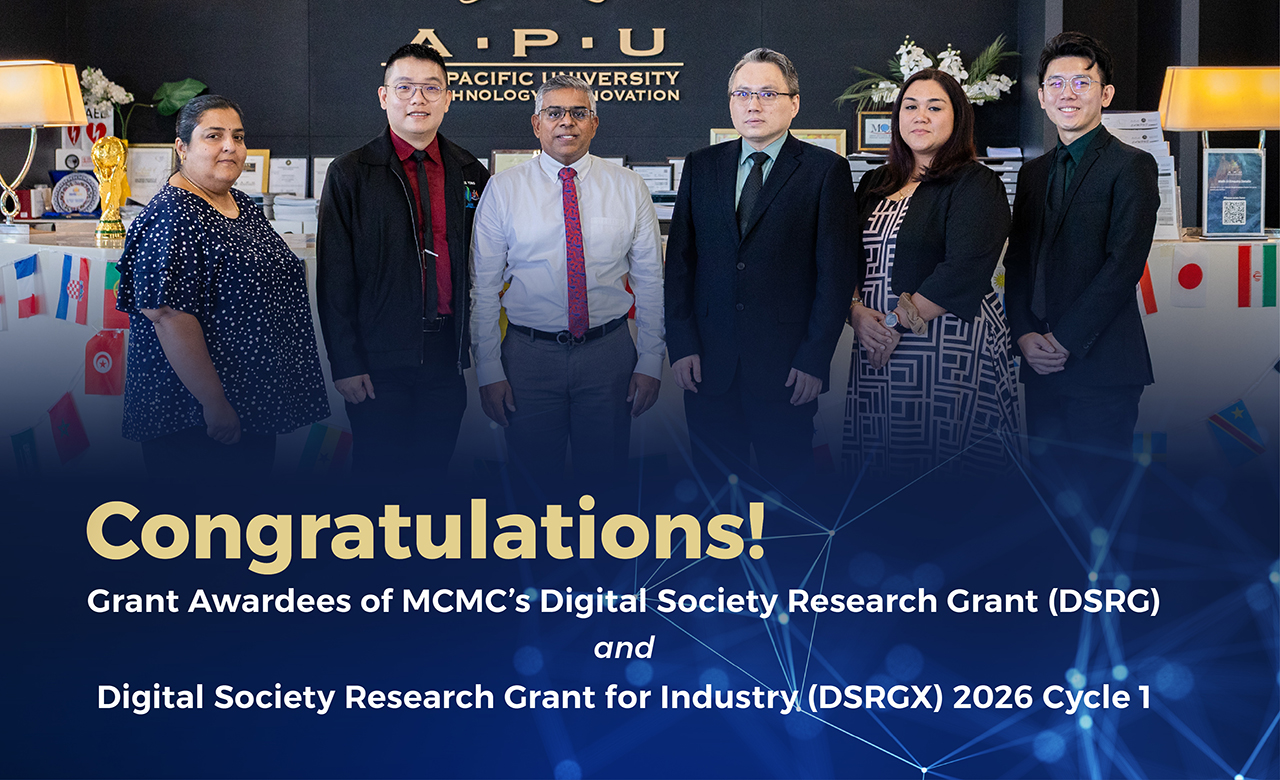
Asia Pacific University of Technology & Innovation (APU) has strengthened its contribution to Malaysia’s digital society agenda after securing two research grants worth RM20,000 from the Malaysian Communications and Multimedia Commission (MCMC).
Announced in July 2026, the grants were awarded under MCMC’s Digital Society Research Grant (DSRG) and Digital Society Research Grant for Industry (DSRGX) 2026 Cycle 1. The projects will be led by academics from APU’s School of Technology and School of Engineering, supported by multidisciplinary researchers across the university.
- Measuring the Impact of Internet Safety Education
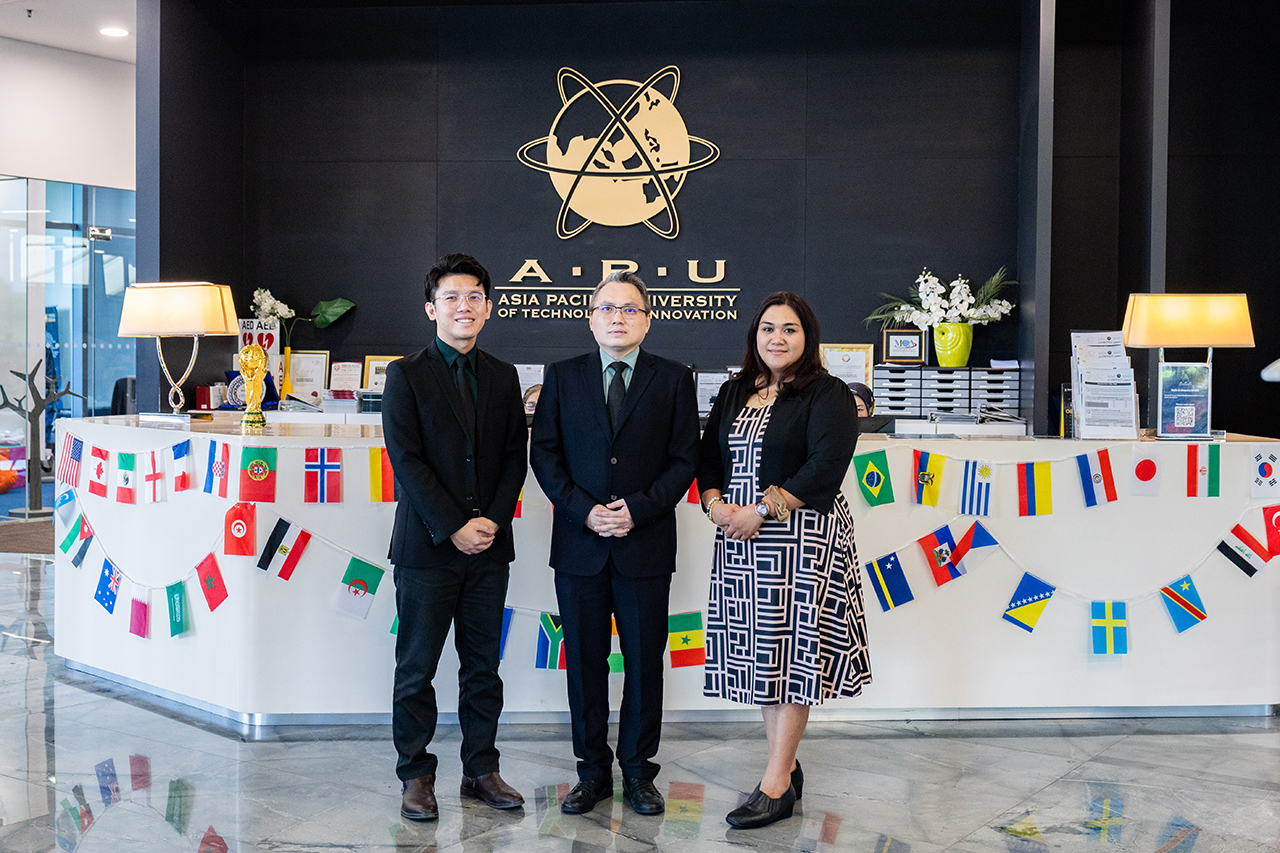
The first project is led by Assoc Prof Dr Thang Ka Fei, Senior Head of APU’s School of Technology. Under the Digital Citizenship & Cyberwellness (DCC-3) focus area, the study will evaluate Kempen Internet Selamat (KIS), MCMC’s nationwide school-based campaign promoting safe and responsible online behaviour among students.
Running from July 2026 to March 2027, the project adopts a mixed-methods, quasi-experimental and longitudinal design. It will track a cohort of school-going children in Negeri Sembilan, together with a matched control group, across three time points.
Joining Dr Thang are Asst Prof Ts Dr Vinesha Selvarajah of the School of Technology, who will serve as Digital Safety and Cyber Risk Content Specialist, and Mr Tan Wei Yu of the School of Psychology, who will lead the behavioural and educational psychology components.
Guided by the Theory of Planned Behaviour, the Ebbinghaus Forgetting Curve and Cognitive Load Theory, the research will assess cyberwellness through information processing, social reinforcement and applied cybersecurity competency.
Rather than measuring awareness alone, the study will examine students’ digital-safety knowledge, message retention, behavioural intentions and demonstrated safe-online practices. Data will be gathered through gamified assessments, scenario-based simulations and theory-driven surveys, supported by insights from teachers, parents and programme delivery partners.
The findings are expected to provide MCMC with its first structured longitudinal evidence on whether KIS produces measurable improvements in students’ knowledge and behaviour. The results may guide future refinements to the campaign’s content, delivery and reinforcement strategies.
- Advancing Fairness in the Gig Delivery Economy
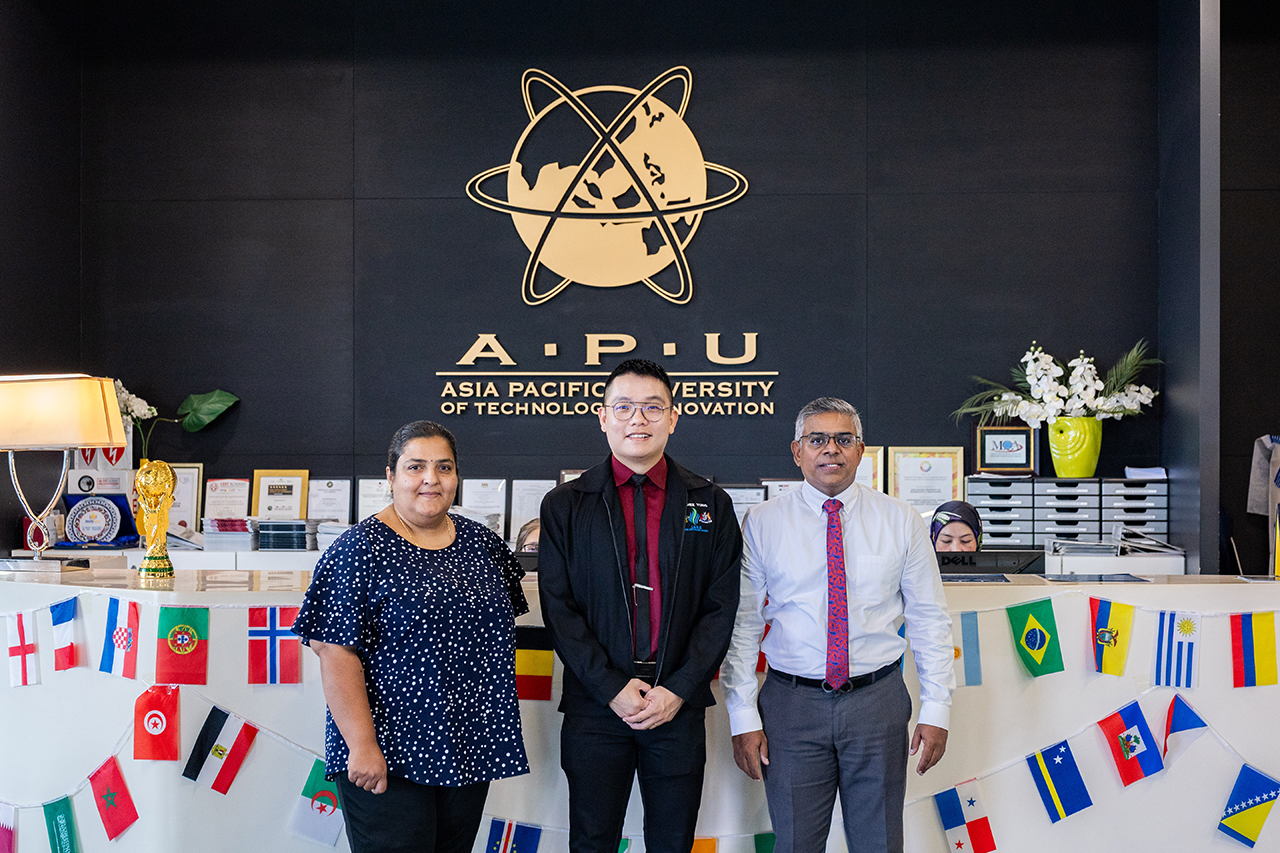
The second project, titled “Parcel Delivery Pricing and Worker Protection in the Gig Economy: Policy Implications”, is led by Asst Prof Ir EUR ING Ts Dr Lau Chee Yong, Assistant Professor and Programme Leader of Computer Engineering at APU’s School of Engineering, and Lead of the Visionary AI Studio.
Parked under the Future of Work (FW-1) focus area, the study also runs from July 2026 to March 2027. It builds on Dr Lau’s MCMC-funded DSRG 2025 research, which assessed Malaysia’s courier industry readiness for work-sharing models.
This new phase shifts the focus from operational efficiency to the pricing and compensation dynamics affecting gig delivery workers. It will examine how differences between traditional home-delivery pricing and subsidised platform pick-up services influence compliance with MCMC’s non-mandatory parcel delivery pricing guidelines and affect courier compensation and welfare.
The mixed-methods study will combine surveys, semi-structured interviews and focus group discussions with courier companies and gig delivery workers. It will also use AI-based data interpolation techniques, including Gaussian Process Regression and multiple imputation, to reconstruct fragmented pricing and compensation data.
A supervised machine learning model will be developed to generate a Worker Vulnerability Index, predicting income precarity based on platform type, delivery mode and working conditions.
Dr Lau will be supported by Prof Ir EUR ING Ts Dr Vinesh Thiruchelvam, APU’s Chief Innovation, Enterprise & Sustainability Officer, and Ms Hema Latha Krishna Nair, Senior Lecturer at the School of Computing and Head of the Asia Pacific Centre of Analytics (APCA).
Prof Vinesh will contribute expertise in technology-enabled logistics innovation and policy framework development, while Ms Hema will lead the survey design, statistical analysis and qualitative analysis of stakeholder interviews.
The findings are expected to support MCMC in developing fairer pricing guidelines and worker protection frameworks under the PAKEJ+ sustainability agenda for Malaysia’s gig delivery economy.
Research that Supports National Development
“It is encouraging to see APU researchers recognised in two equally important areas under the DSRG and DSRGX 2026 Cycle 1 call. Dr Thang’s study examines whether digital safety campaigns truly influence children’s online behaviour, while Dr Lau’s research addresses the welfare of gig workers in Malaysia’s digital economy,” said Prof Vinesh.
“Both projects reflect the rigorous, evidence-based research needed to strengthen MCMC’s programmes and policies. I am proud of APU’s research excellence and congratulate both teams on this achievement,” he added.
The grants expand APU’s portfolio of MCMC-funded research and reinforce its commitment to delivering policy-relevant recommendations that support Malaysia’s digital society, cyberwellness and future of work.
News & Happening
Download e-Brochures
Intake Calendar
Want to know more ?
Let’s Connect